Sclerotherapy dosage: what the European guideline defines and what it leaves open
The guideline written by 23 European societies does not discuss which sclerosing to use. It binds the concentration to the diameter of the vein, puts 10 mL of foam per session and limits the polydocanol to 2 mg/kg per day — and says, with all the letters, where the evidence is still missing.
 View the video lesson
Sclerotherapy is directed chemical ablation: sclerosing destroys the endothelium and, in the long term, transforms the vein into a fibrous cord. The stated objective in the guideline is not vessel thrombosis, which can recanalize, but this definitive transformation. From then on, everything becomes a dose — and that is where the document written on behalf of 23 European phlebological societies at a conference from 7 to 10 May 2012 in Mainz is specific.
The daily ceiling of polydocanol
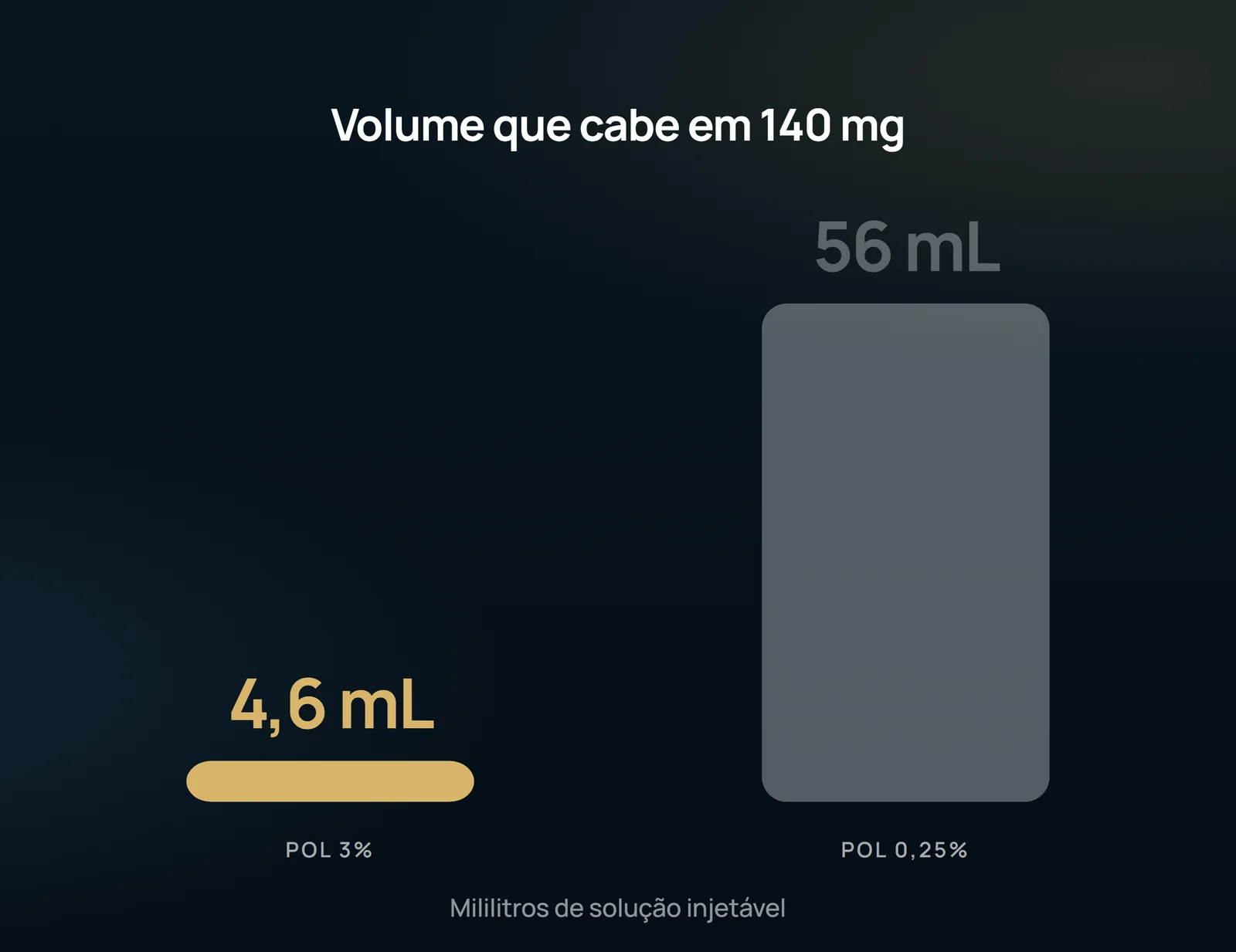
Polydocanol is available at 0.25%, 0.5%, 1%, 2% and 3% — which corresponds to 5, 10, 20, 40 and 60 mg in an ampoule of 2 mL. The dose of 2 mg per kilogram body weight per day should not be exceeded. In a 70 kg patient this means 140 mg, regardless of the amount that would be medically indicated.
For tetradecyl sodium sulfate, the reasoning is another: excessive doses lead to hemolysis, and manufacturers recommend limiting the dose to no more than 4 mL of the solution to 3% and not more than 10 mL of all other concentrations per treatment session. It is provided at 0.2%, 0.5%, 1% and 3%.
Concentration comes out of diameter
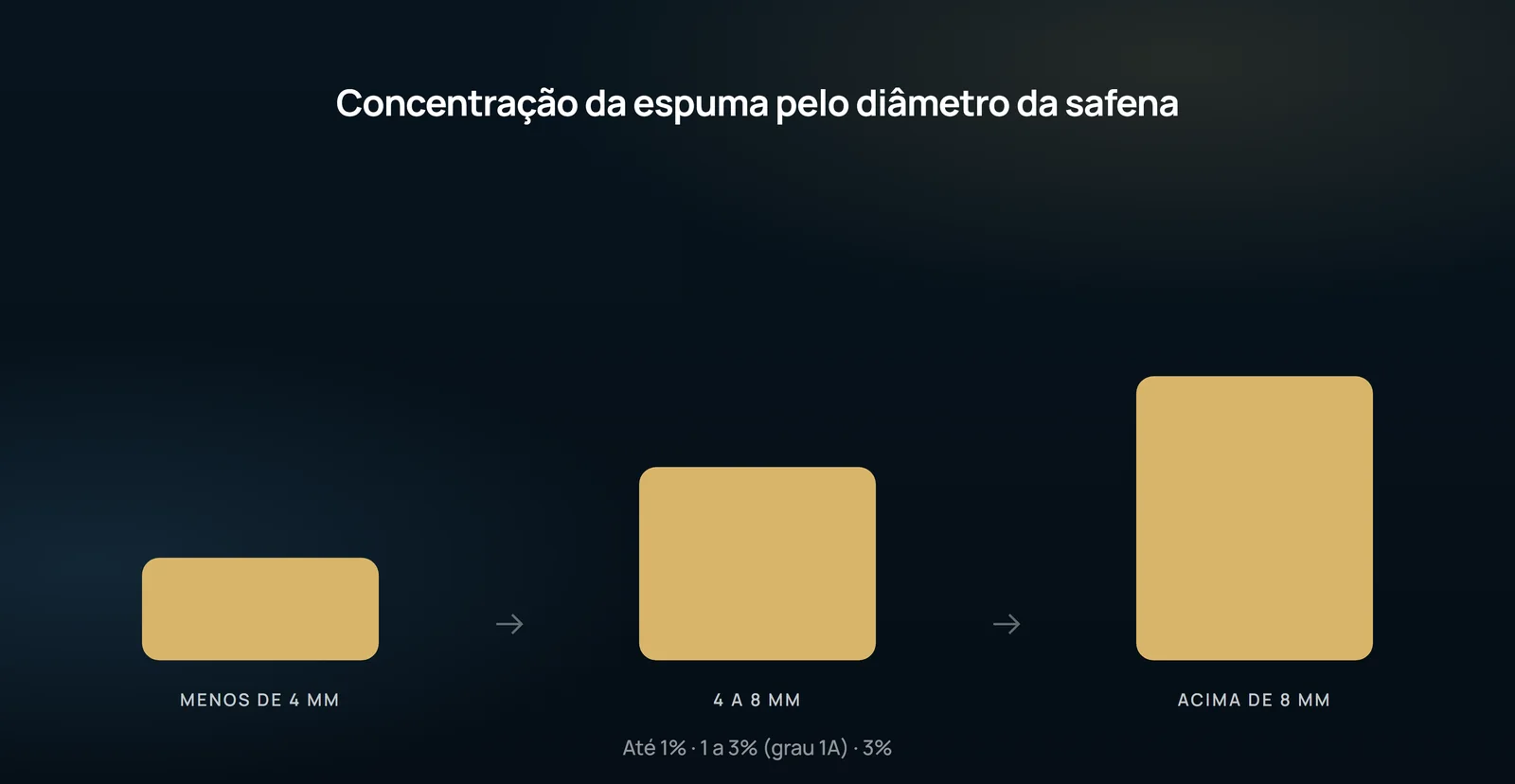
In foam sclerotherapy, the guideline chooses the concentration by the diameter of the venous segment to be treated. Safene with less than 4 mm: up to 1% (GRAU 1B for POL). Between 4 and 8 mm: 1-3%, the band with the strongest recommendation of the board (GRAU 1A for POL). Above 8 mm: 3% (GRAU 1A). tributaries variables: up to 2% POL. Telangiectasias: up to 0.5% POL and up to 0.25% STS. In incompetent perforators, recurrent varicose veins and venous malformations, 1-3%.
In liquid sclerotherapy, the volumes suggested by injection point are up to 0.2 mL in telangiectasis, up to 0.5 mL in reticular varices and up to 2.0 mL in C2 varicose veins. Suggested liquid concentrations range from 0.25-0.5% POL in telangiectasis to 3% in large varicose veins.
The foam ceiling per session
The foam is produced by turbulent mixture of liquid and gas in two syringes connected by a three-way tap (Tessari method) or a two-way connector (Tessari-DSS), in the proportion of 1+4 to 1+5 (GRAU 1A). The air is recommended as a gaseous component in GRAU 1A, and the mixture of CO2 with oxygen in GRAU 2B. The time between producing and injecting should be as short as possible. For large veins, the needle diameter should not be less than 25 G, so as not to degrade the foam quality.
Risks that have number
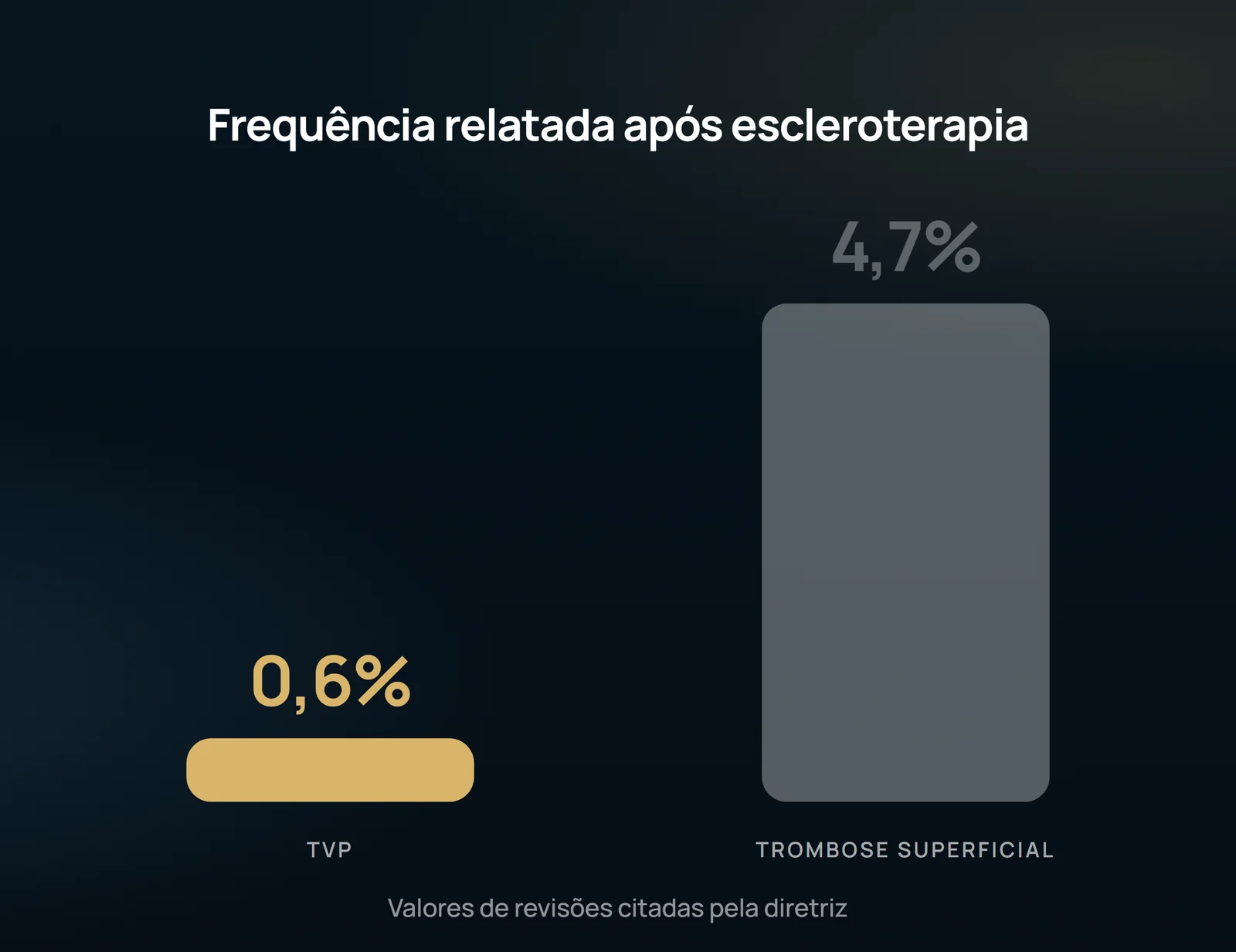
The general frequency of thromboembolic events following sclerotherapy is <1%; in the meta-analysis by Jia et al. cited by the guideline, the frequency of DVT was 0.6%, most distal and asymptomatic in routine duplex. For superficial venous thrombosis, the frequencies reported in the literature range from 0% to 45.8%, with a mean value of 4.7% — the dispersion reflects the lack of consensus on what to call phlebitis after sclerotherapy. Residual pigmentation has been reported from 0.3% to 30% in the short term, and the guideline recommends removing superficial clots to reduce it (GRAU 1C). Visual disorders and migraine are uncommon with foam and very rare with liquid; a right-left shunt, present in about 30% of the general population, was suggested as a factor.
What the directive does not authorize to state
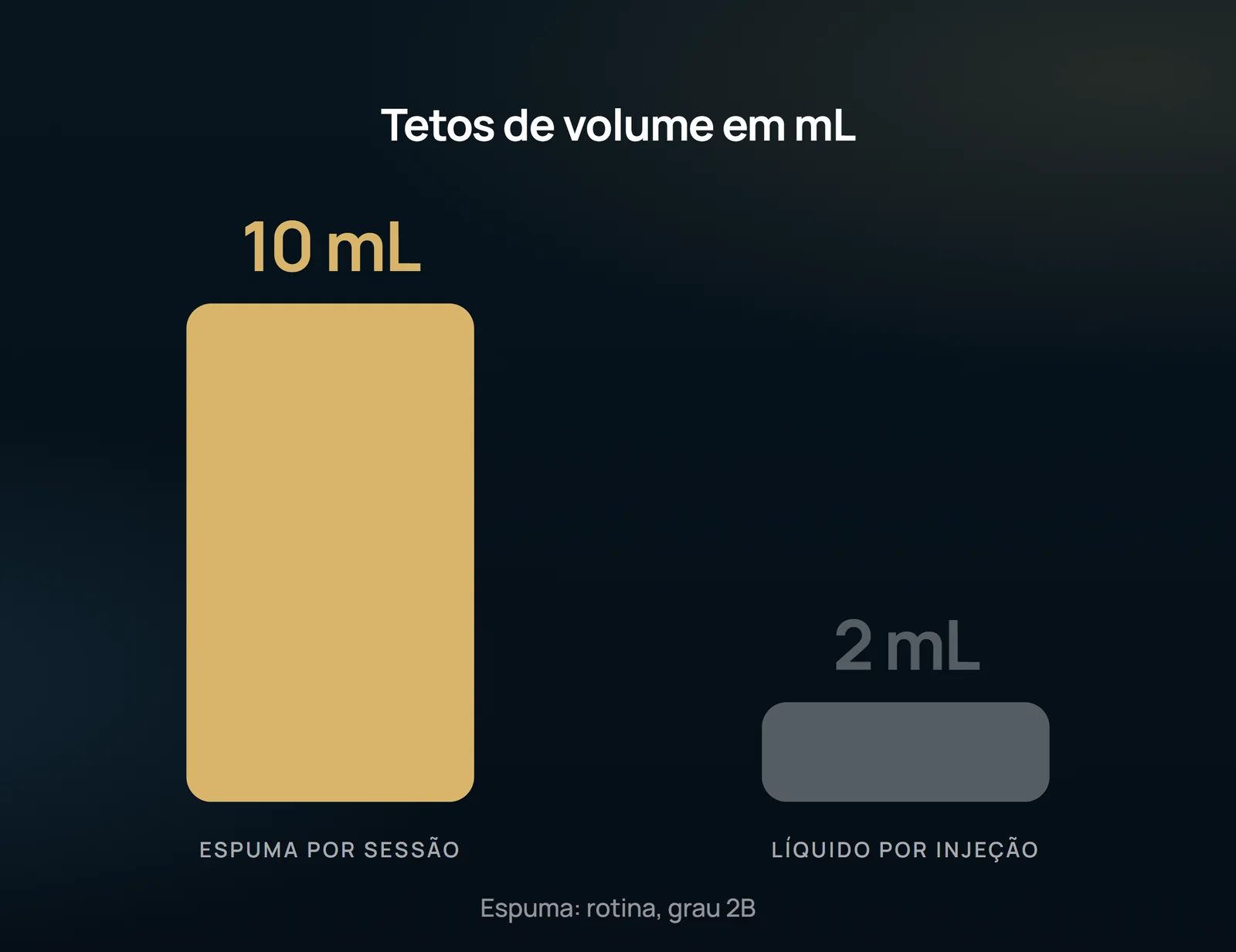
A guideline is not an essay, and this one says that of itself: it applies to "standard situations", does not claim completeness, does not restrict the freedom of the physician to choose the most appropriate method and — textually — compliance with recommendations does not always guarantee diagnostic and therapeutic success. The degrees matter: the 10 mL foam ceiling is GRAU 2B, because, in the words of the document itself, there is no evidence-based limit for the maximum volume of foam per session — 10 mL came from a previous European consensus, as an expert opinion. The text is 2012 and deliberately left out the regulatory situation of each country, which weighs in Brazil, where availability and concentrations are not European. And the decision on the adequacy of any action continues to be the physician in face of the individual situation, after mapping with duplex.
Content addressed exclusively to health professionals. No individual result is guaranteed: the indication depends on clinical evaluation and imaging examination of each patient (CFM 2,336/2023).